
Finding the right food and drink experiences is not easy. I was looking for a Nishiki Market food tour that would let me try local cuisine and learn how the market fits into Kyoto’s gourmet traditions.
Does that sound like you? You’re in the right place.
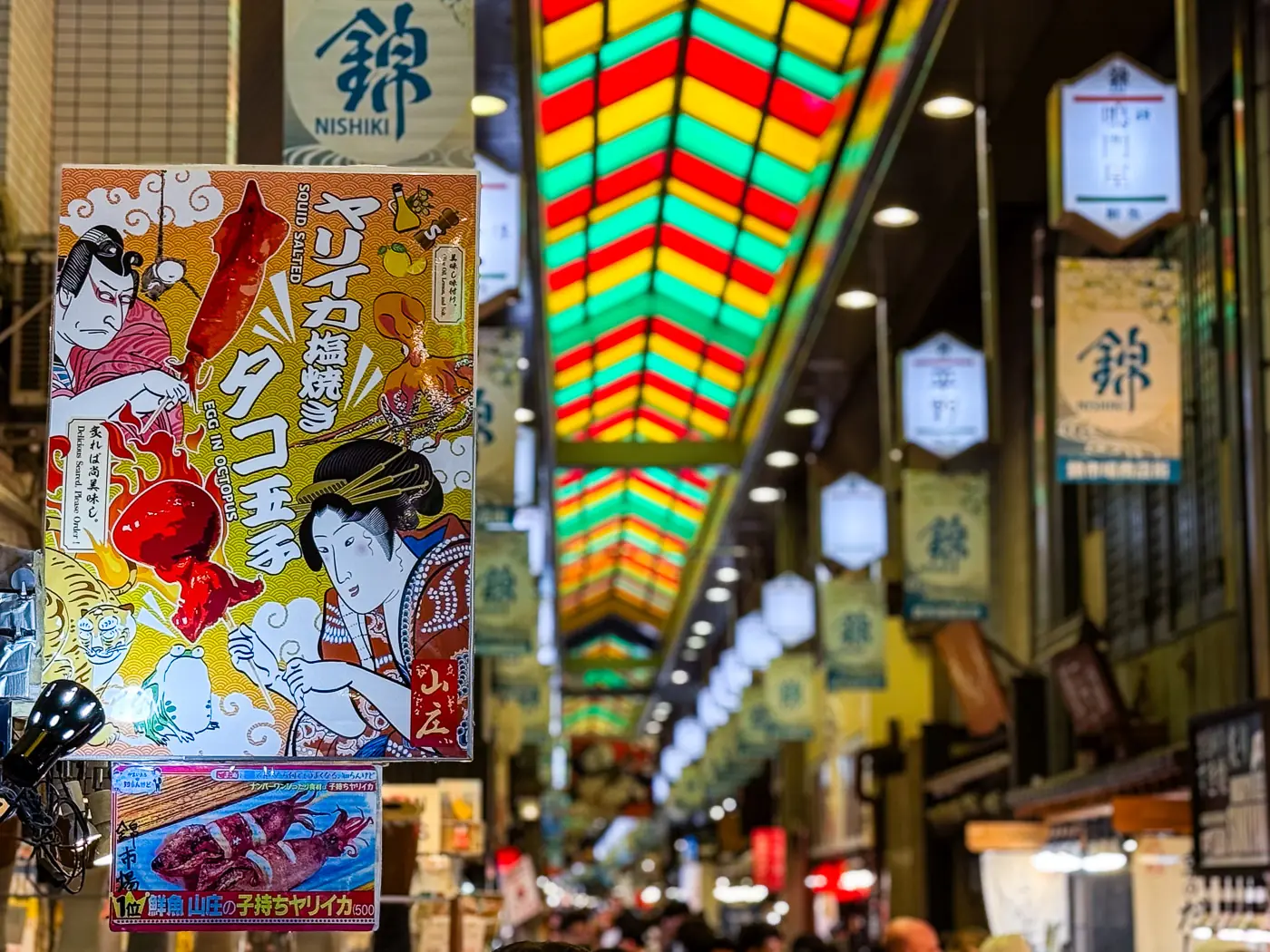
I’m thrilled to share that I discovered the perfect experience! Here, I’ll uncover the unique qualities of this exceptional tour and what I learned about this extraordinary market, ‘Kyoto’s Kitchen’, which stretches nearly 400 metres and officially began in 1615.
Why should you trust my insights? I called Japan (Osaka and Nara) my home for over a decade, and I started Food Tours Japan to help fellow food enthusiasts make the most of their culinary journeys in the world’s top food and drink destination.
After reading this article, you’ll have a more informed choice about whether this is the best Nishiki Market tour for you.
Nishiki Market Food Tour: Quick Links
- Why I Took a Tour After Multiple Visits Before
- Nishiki Market: Past and Present
- Food and Drink Included on the Tour
- Responsible Tour Operator: Useful Words and Tourist Etiquette
- My Exceptional Tour Guide – Toshi-san
- Why I Recommend this Nishiki Market Tour
Disclaimer: I paid for this tour. If you book it via one of my links, I will earn a small commission, which helps me to produce more helpful articles like this.
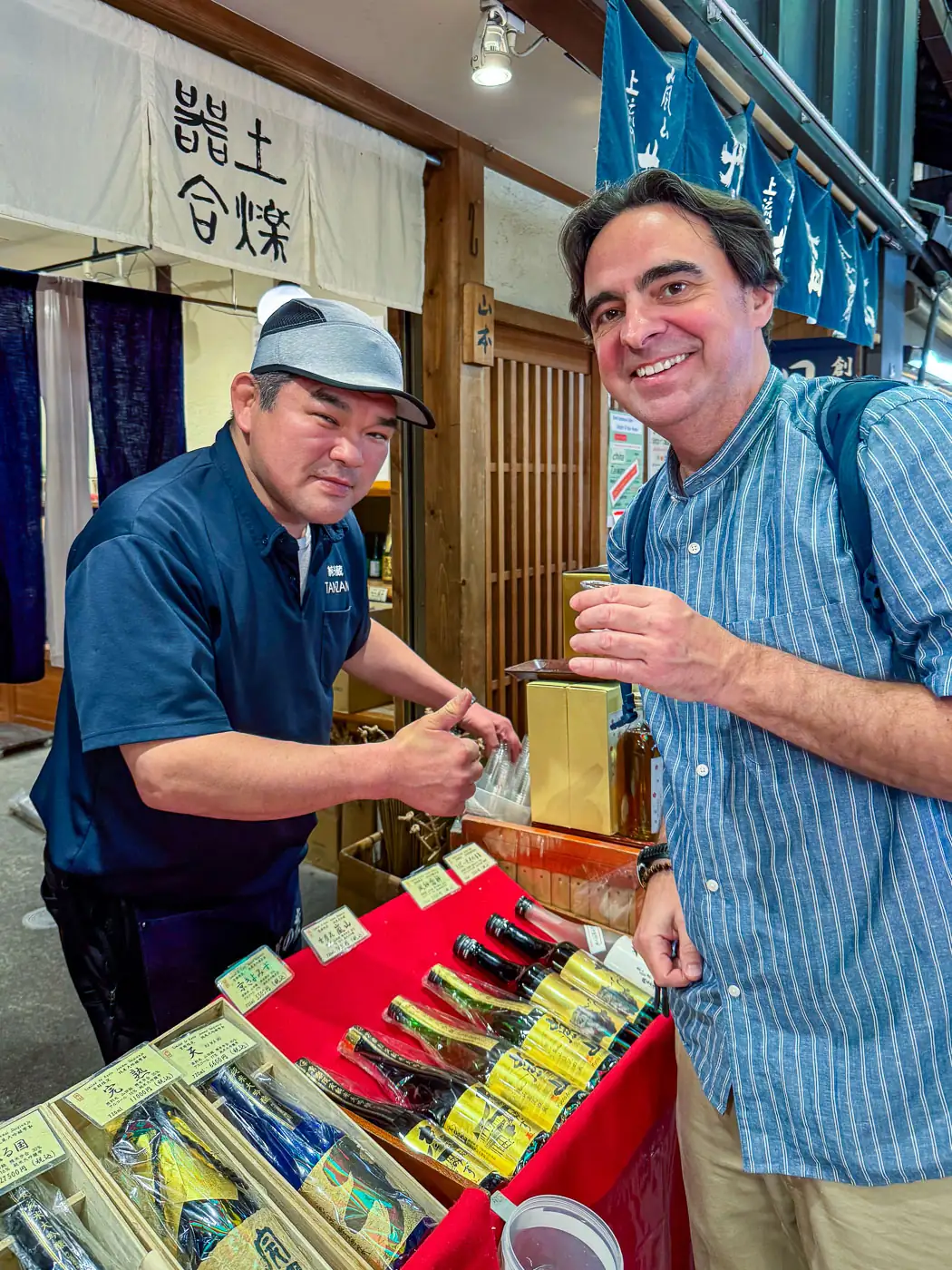
I’m only in it for the free sake with my sommelier at Nishiki Market! – © Chris P King / Food Tours Japan
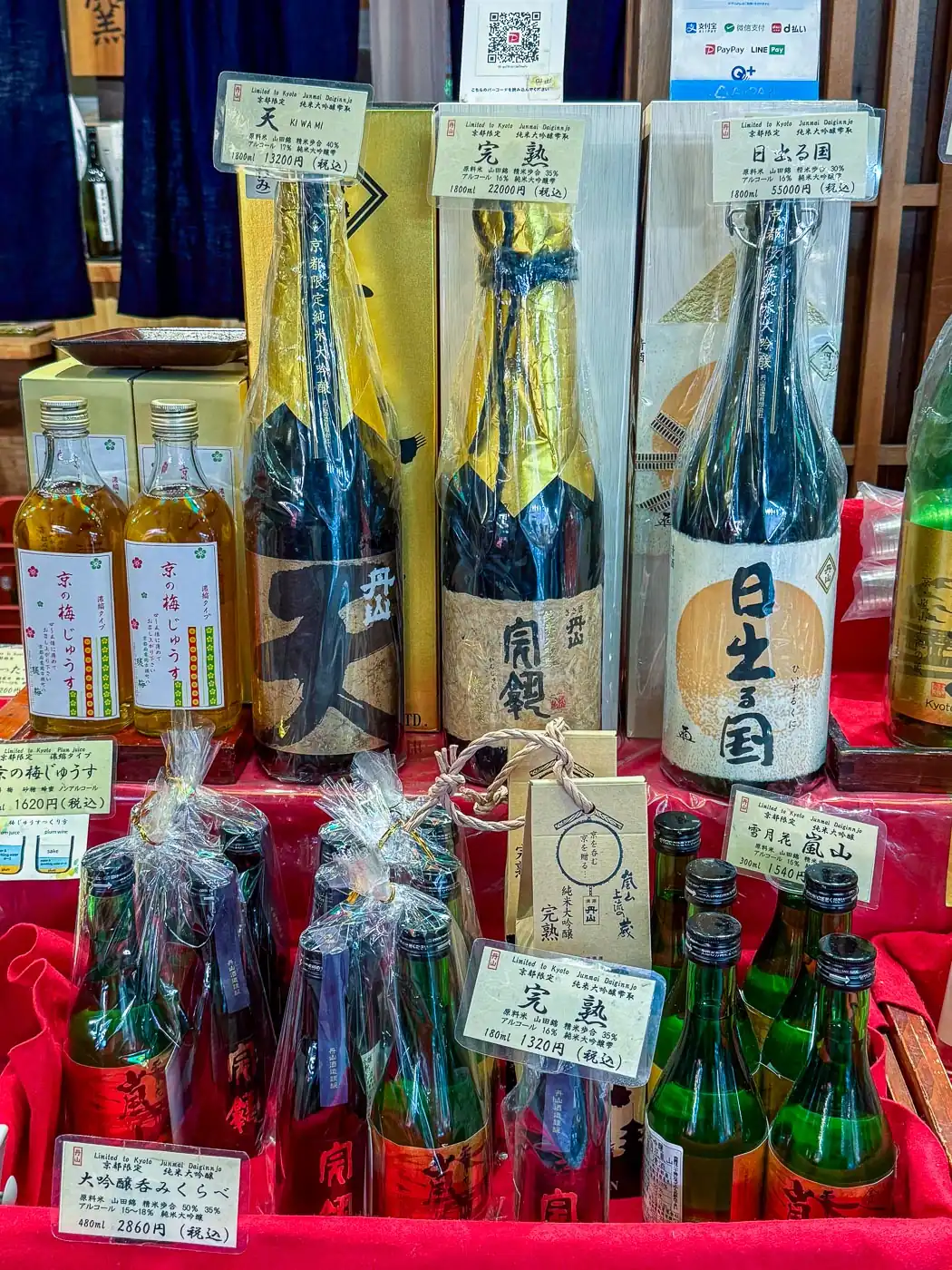
Exclusive sold in Kyoto only sake at Nishiki Market from Tanzan Brewery, Kameoka City, upstream from Arashiyama – © Chris P King / Food Tours Japan
Key Takeaways from My Tour
The experience in summary:
- Authentic Kyoto cuisine – the delicious food was the centrepiece of the tour, with locally-sourced produce and authentic Kyoto dishes
- Enchanting Nishiki Market – the market’s rich history is fascinating, and I discovered off-the-beaten-track stores for food tastings and to bring home
- Outstanding tour guide – the most memorable travel experiences are the people you meet, and I struck gold with this guide and tour operator
- Bonus food and drink – along the way, you’ll try free samples and have the opportunity to purchase additional bites and beverages
- Who is this tour for? – If you love trying local food and are interested in how Nishiki Market has shaped Kyoto’s rich culinary culture, you’re gonna love it
Why I Took a Tour After Multiple Visits Before
With an abundance of ready-to-eat seafood, wagyu beef and stalls piled high with all manner of sumptuous bites, Nishiki Market offers a diverse range of food and drink, catering not only to visitors but also to Kyoto residents and culinary professionals, making it a must-visit for any food enthusiast.
I’ve wandered through the market half a dozen times before and enjoyed that freedom; however, this time, I wanted to dig deeper into Kyo-ryori (Kyoto cuisine) and the city’s most iconic culinary location.
With over 100 eateries in Nishiki Market, ranging from elegant shops serving locally produced fare to decades-old restaurants, snack stands, and traditional stalls that also cater to tourists, having an expert guide was a game-changer.
That’s the beauty of taking a tour of Nishiki Market: it’s not just about the food, it’s about uncovering the authentic gourmet culture, people, traditions, history, and the market’s central role in Kyoto’s development.
After conducting some research, I found the perfect experience that covered what I was looking for and much more. Toshi-san’s passion, local knowledge, and personal anecdotes about the market and Kyoto’s food and drink scene brought the place to life.
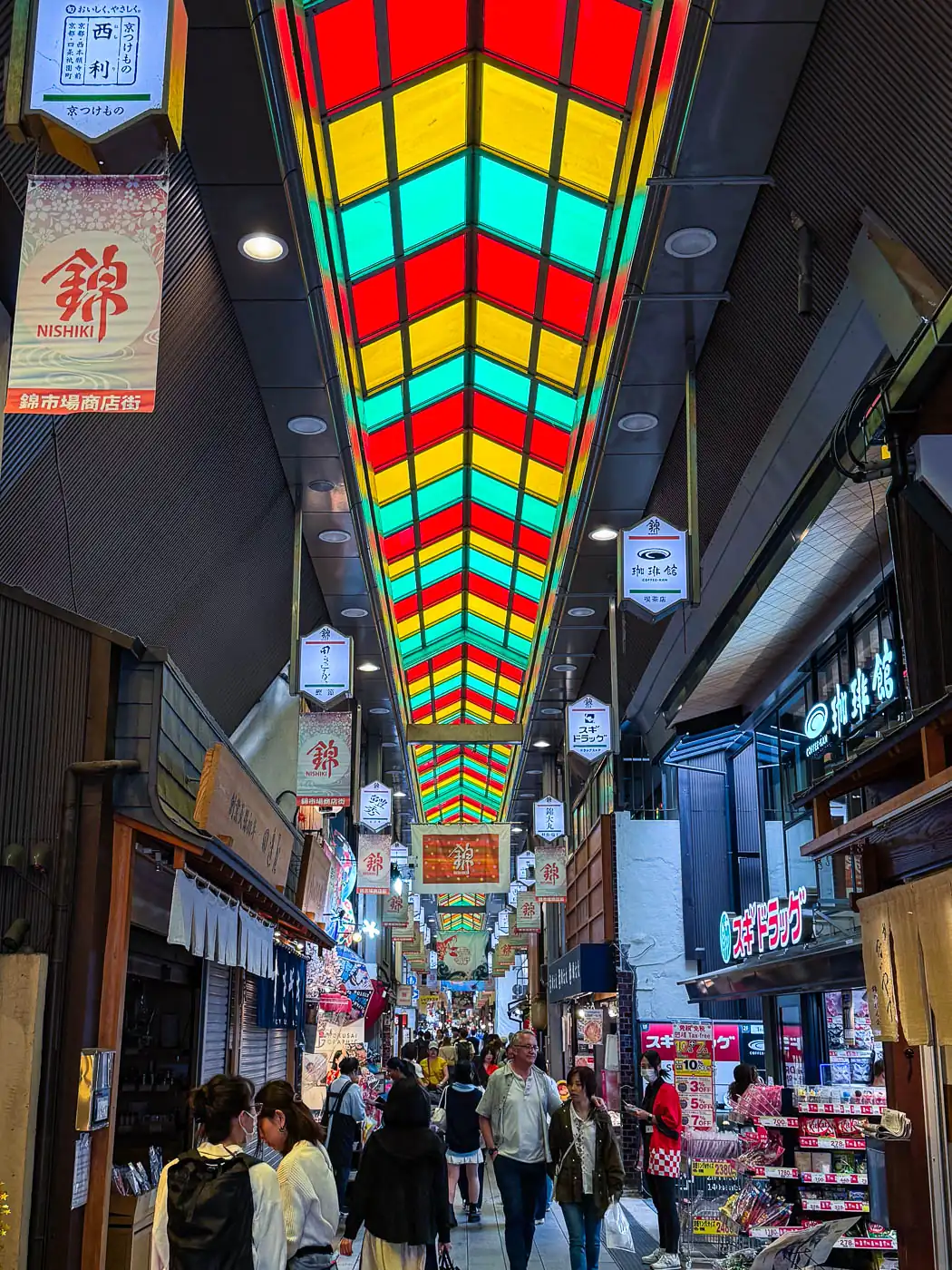
A Nishiki Market tour is the best way to discover Kyoto’s local cuisine and gourmet culture – © Chris P King / Food Tours Japan
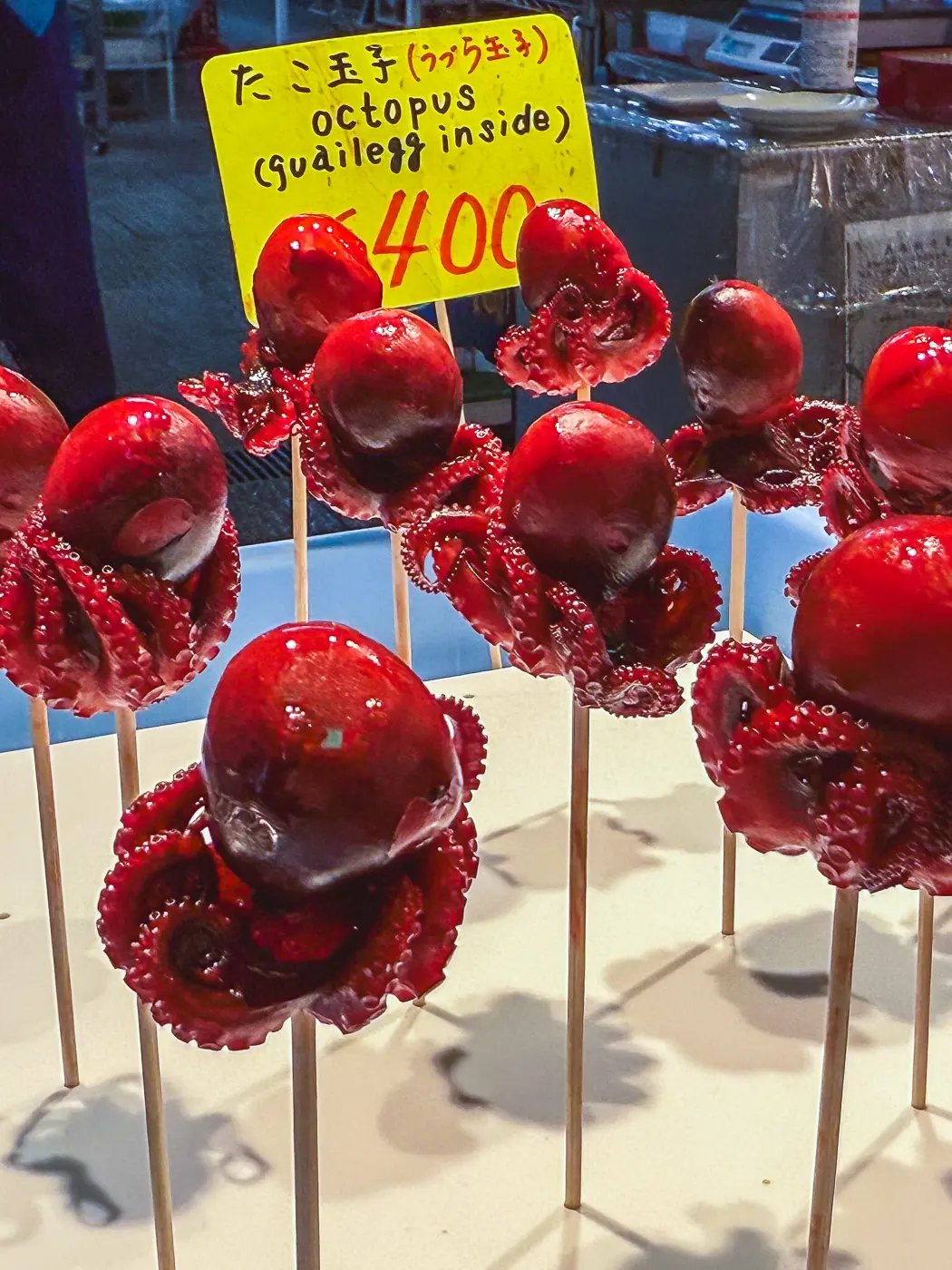
Tako tamago (octopus with quail egg), Nishiki Market’s most iconic dish – © Chris P King / Food Tours Japan
Nishiki Market: Past and Present
Although I had previously visited Nishiki Market, I was unaware of its rich heritage and its significance to Kyoto’s development.
Unveiling the Past: The Rich History of Nishiki Market
Nishiki Market officially opened in 1615 and was formally recognised as a fish market. However, its roots as a place to sell fish could go back to the 8th century.
Toshi explained how four things combined to make Nishiki Market the ideal location for a fish market.
- Groundwater
- Location
- The Imperial Palace
- Seafood
I’ve added additional context based on my knowledge and research.
Groundwater: The essence of Nishiki Market
Groundwater beneath Nishiki Market maintains a year-round temperature of 15°C to 18°C due to its abundance of pure, cold water. Known as ‘Nishiki no mizu’ (Nishiki water), it has played a crucial role in the birth of the market and in supporting its development.
This groundwater is the primary reason the area started as a street-vendor fish market around 782, although there’s no reliable source for this date.
As the market evolved, every shop had two underground wells. The most critical one contained a chamber you could descend into that served as an early form of refrigeration for preserving fish, meat, and other produce.
Describing each of these wells as a ‘silver well’ and a ‘gold well’, Katsumi Utsu, the chairperson of the Kyoto Nishiki Market Shopping Centre Promotion Association, continues:
‘…gold wells are wells that bring in money and are used for stores, while silver wells are used for drinking and washing water and are for homes.’
I hear you cry that 15°C to 18°C is not very cold. However, for half the year, Kyoto’s monthly mean temperature is above 18°C, peaking at 29°C in August.
Today, some shops at Nishiki Market still use the groundwater to keep live river fish. And the high-quality groundwater is pumped into restaurants to make Kyoto’s renowned light dashi stock and other dishes.
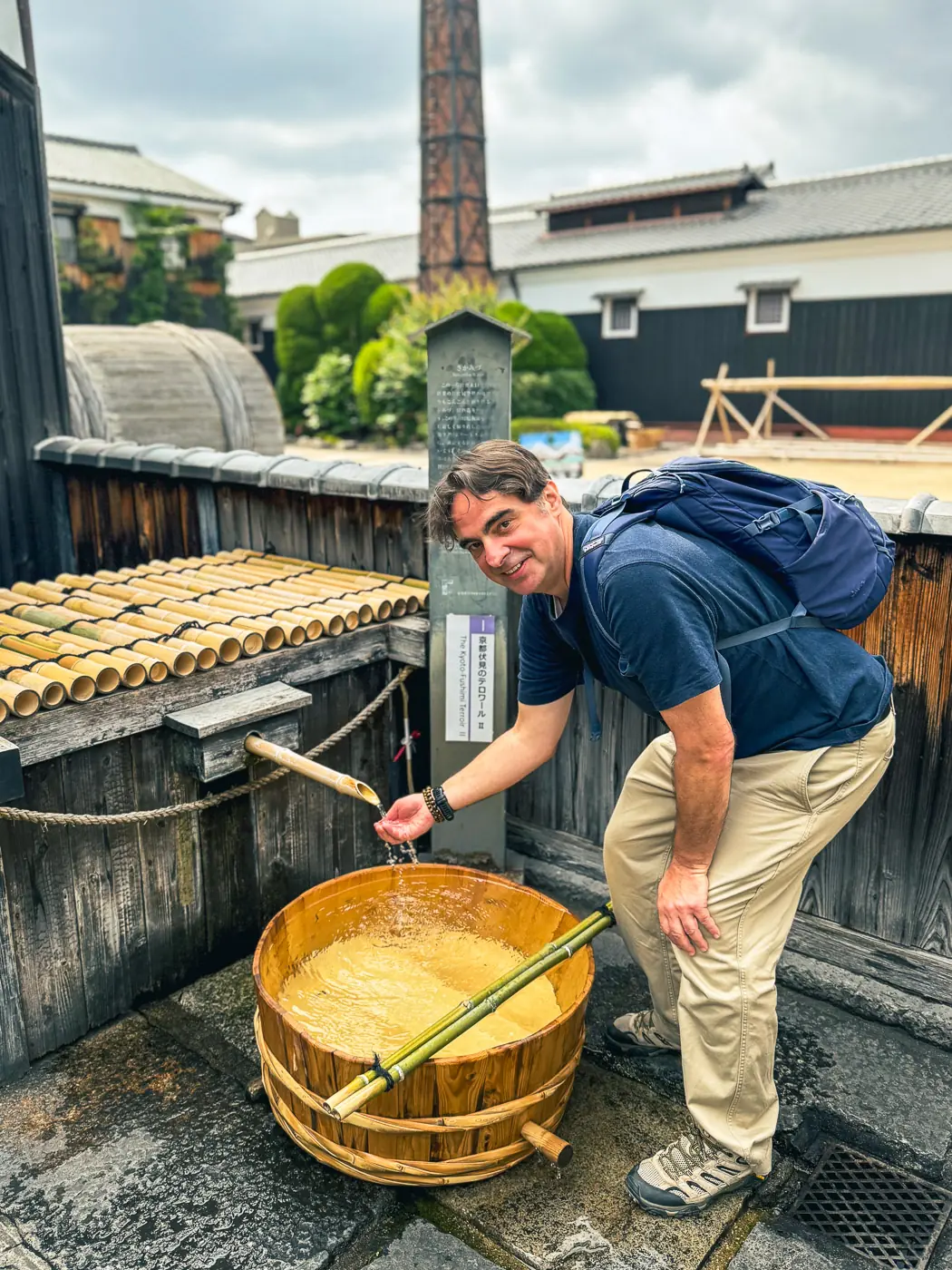
Fushimi sake district in Kyoto
As a side note, Nishiki Market’s development has some similarities to the evolution of Kyoto’s Fushimi sake district. Again, the critical starting point is the pure, high-quality groundwater that produces Fushimi’s famously smooth and mild sake.
As one of Japan’s three most renowned sake districts, I recommend a sake brewery and tasting tour in Fushimi.
Geography: Location of Kyoto
Kyoto’s location is far from the sea, especially so given the transportation technology from when it became Japan’s capital in 794.
In the earlier period up to the 14th century, records show the city mostly consumed freshwater fish. However, people increasingly gained an appetite for fresh seafood caught mostly from Osaka Bay, or the Sea of Japan.
From Osaka Bay to Nishiki Market, it was a difficult 50-kilometre (31-mile) journey by land and sea. While advances in water transportation improved, keeping the fish as fresh as possible was a challenge.
Imperial Palace: The thousand-year capital
Known as the ‘thousand-year capital’, Kyoto served as the imperial capital from 794 to 1868. As the emperor’s court and aristocracy grew richer, so did the military shogunate, which wanted the very best produce Japan could offer.
Throughout this period, Nishiki Market was never more than two kilometres (1.25 miles) from the imperial palace. Its convenient, central Kyoto location made it the ideal spot for serving the ruling classes and the city’s residents.
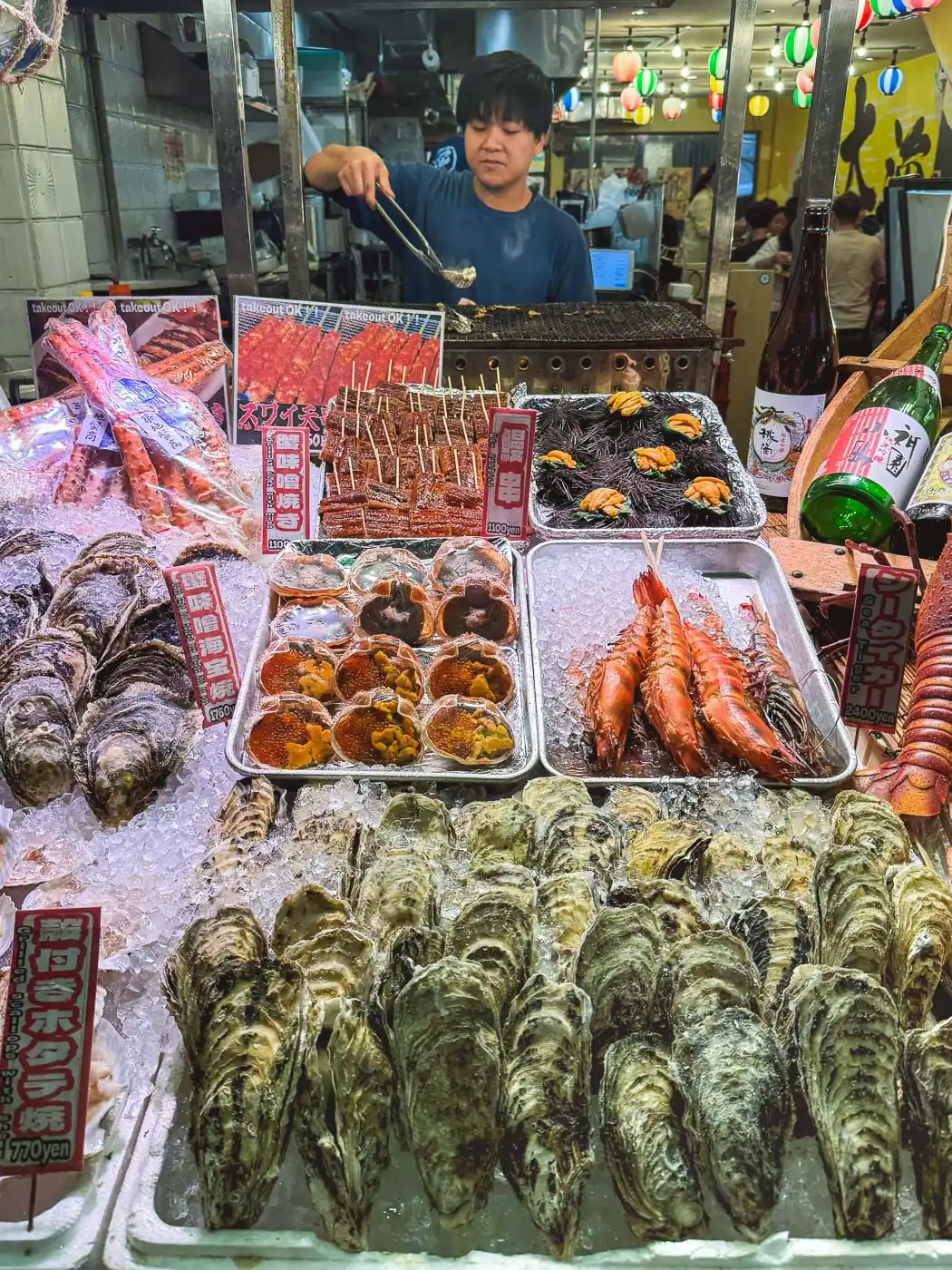
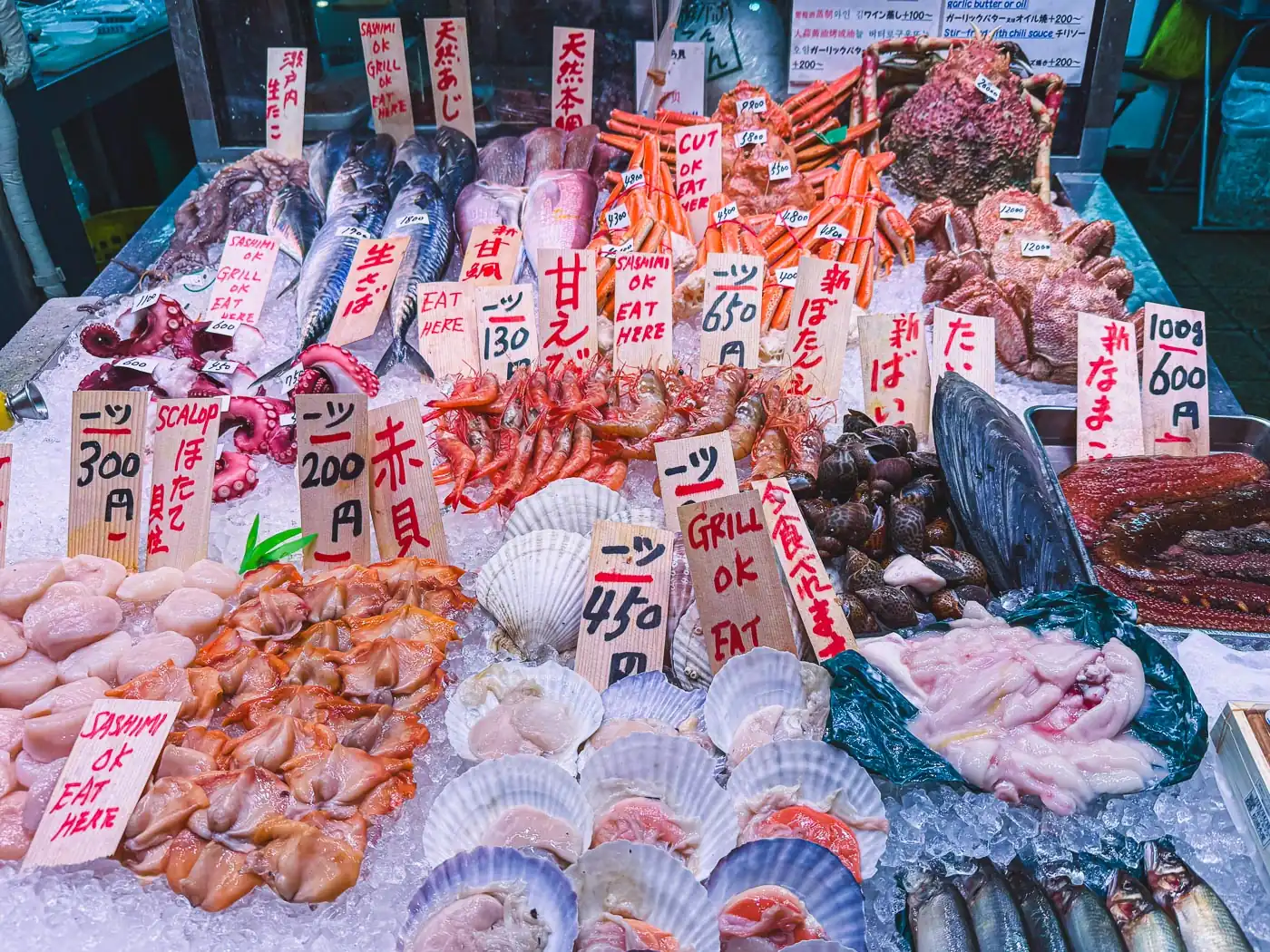
Take your pick from sea urchin, salmon roe, oysters, eel and more at this Nishiki Market seafood stall – © Chris P King / Food Tours Japan
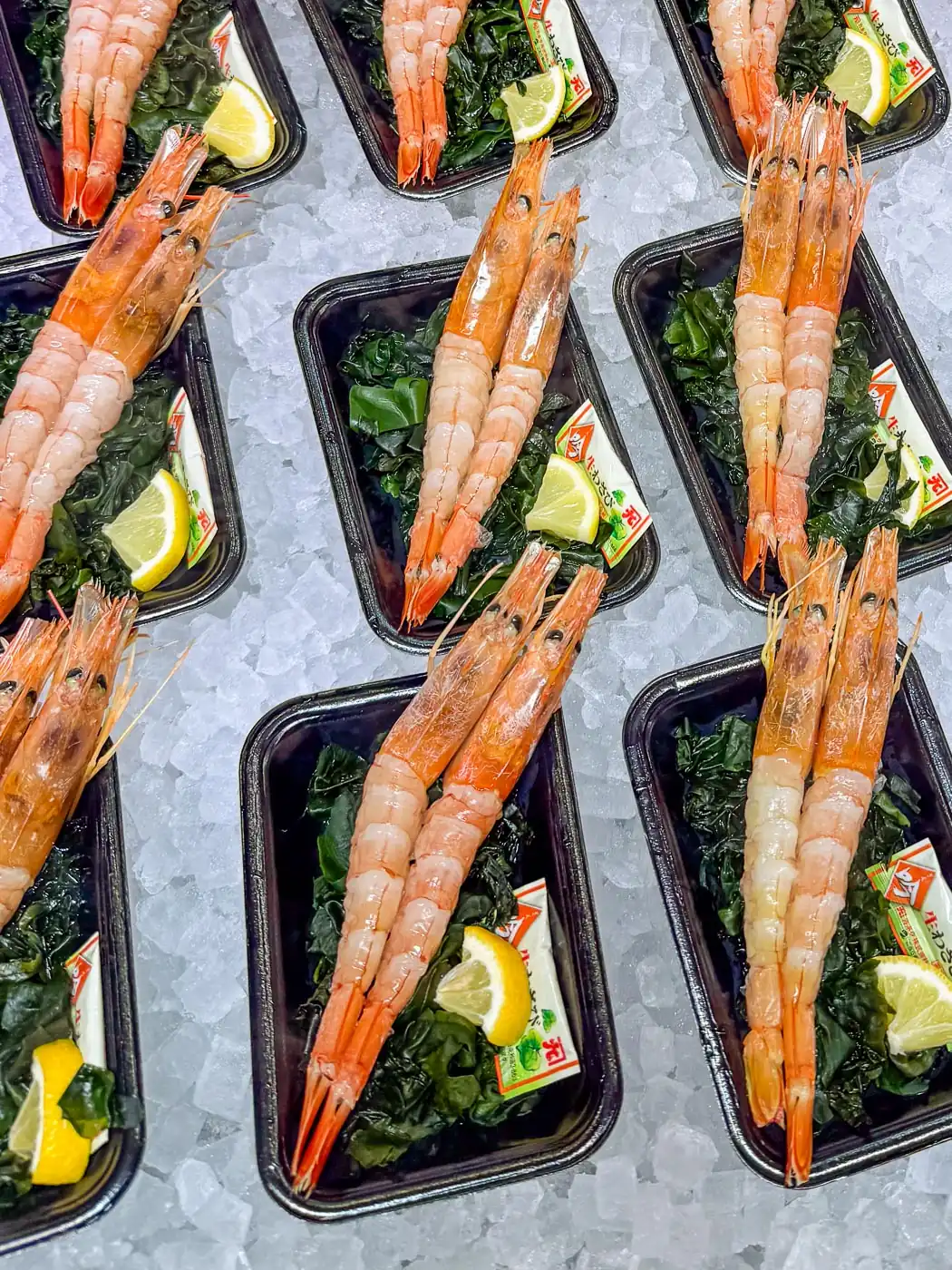
Sweet and succulent botan ebi (prawns) sashimi with wakame (seaweed) at a Nishiki Market seafood stall – © Chris P King / Food Tours Japan
Seafood: Fish and shellfish
The Japanese have been consuming fish and shellfish for thousands of years, both from the sea and freshwater sources. Analysis of human bones from the Jōmon period (c. 14,000 – 300 BCE) reveals that 35% of people’s protein diet was from fish and shellfish.
In the case of sushi, Japan’s first type, narezushi, was preserved with salt and rice. The earliest documented records of eating raw freshwater and saltwater fish date to the 8th and 12th centuries, respectively.
As early as 1311, ‘Yodo fish merchants exchanged money on Nishiki-koji’, suggesting that there were already fish stores on Nishiki-koji (Nishiki Street) at this time.
In 1615, the ruling shogunate granted Nishiki the official title of fish wholesaler. This approval marked the beginning of Nishiki’s transformation into a fully-fledged fish market.
Kyoto’s Kitchen: Nishiki Market today
Today, Nishiki Market has retained its authentic roots, with most of the goods locally procured and produced. It’s an excellent place to try Kyoto specialities, such as tsukemono (pickles), tofu, desserts and sweets, dashimaki (omelette) and more.
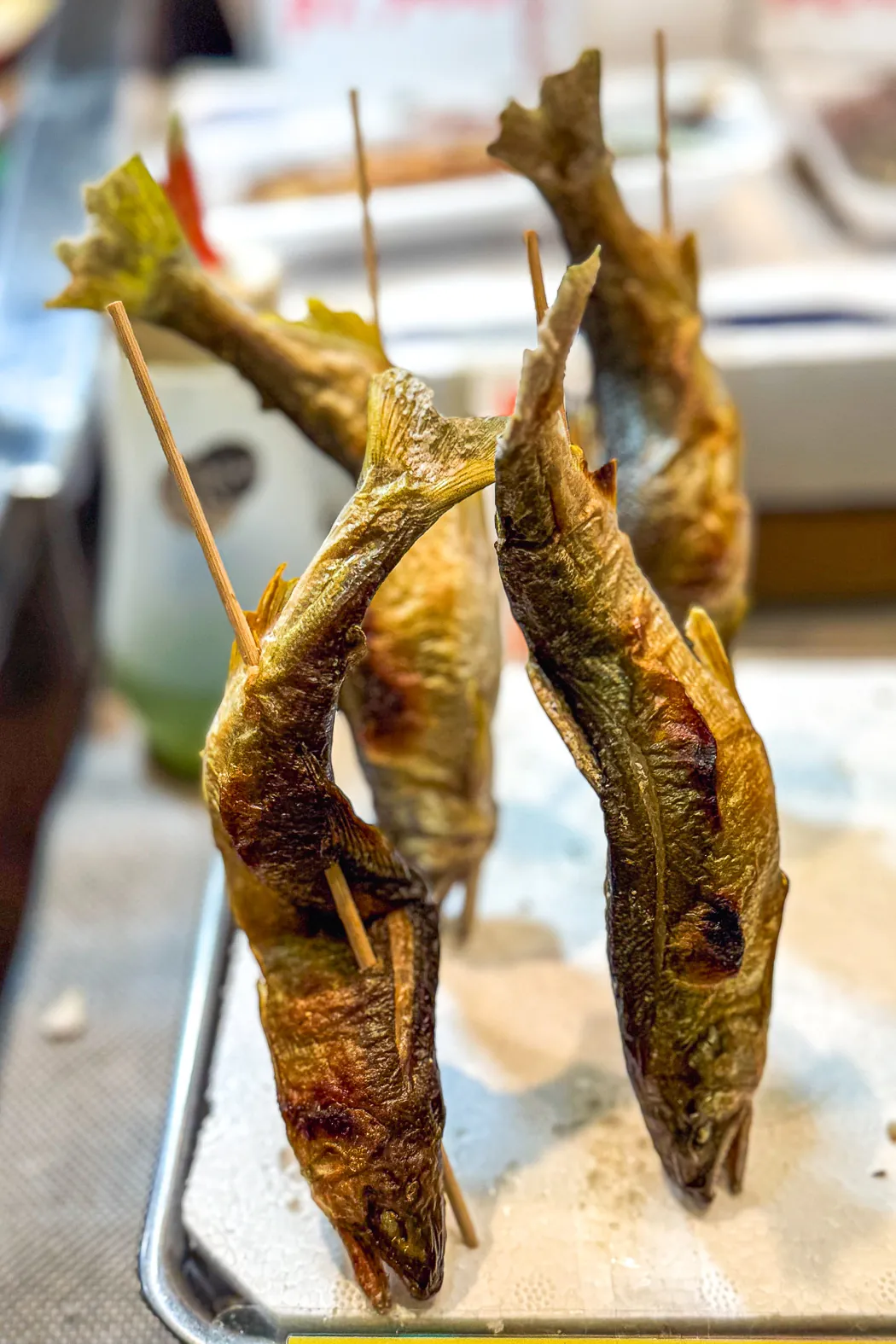
While catering more to tourists with Nishiki Market classics, like tako tamago (baby octopus with quail egg), ayu (sweetfish), and sake. And Japanese favourites like wagyu beef, sumptuous cakes, crazy desserts and a dizzying array of tasty seafood.
The market serves local people and businesses with generations-old stores selling, amongst other things, dashi ingredients, live freshwater fish, pickles, furikake (rice seasoning), seafood, seasonal fruit and vegetables, knives and cookware.
Many of these stores sell foodstuffs and products suitable for taking home. What budding cook doesn’t want an authentic Japanese knife? Or, beautifully crafted cooking utensils or tableware.
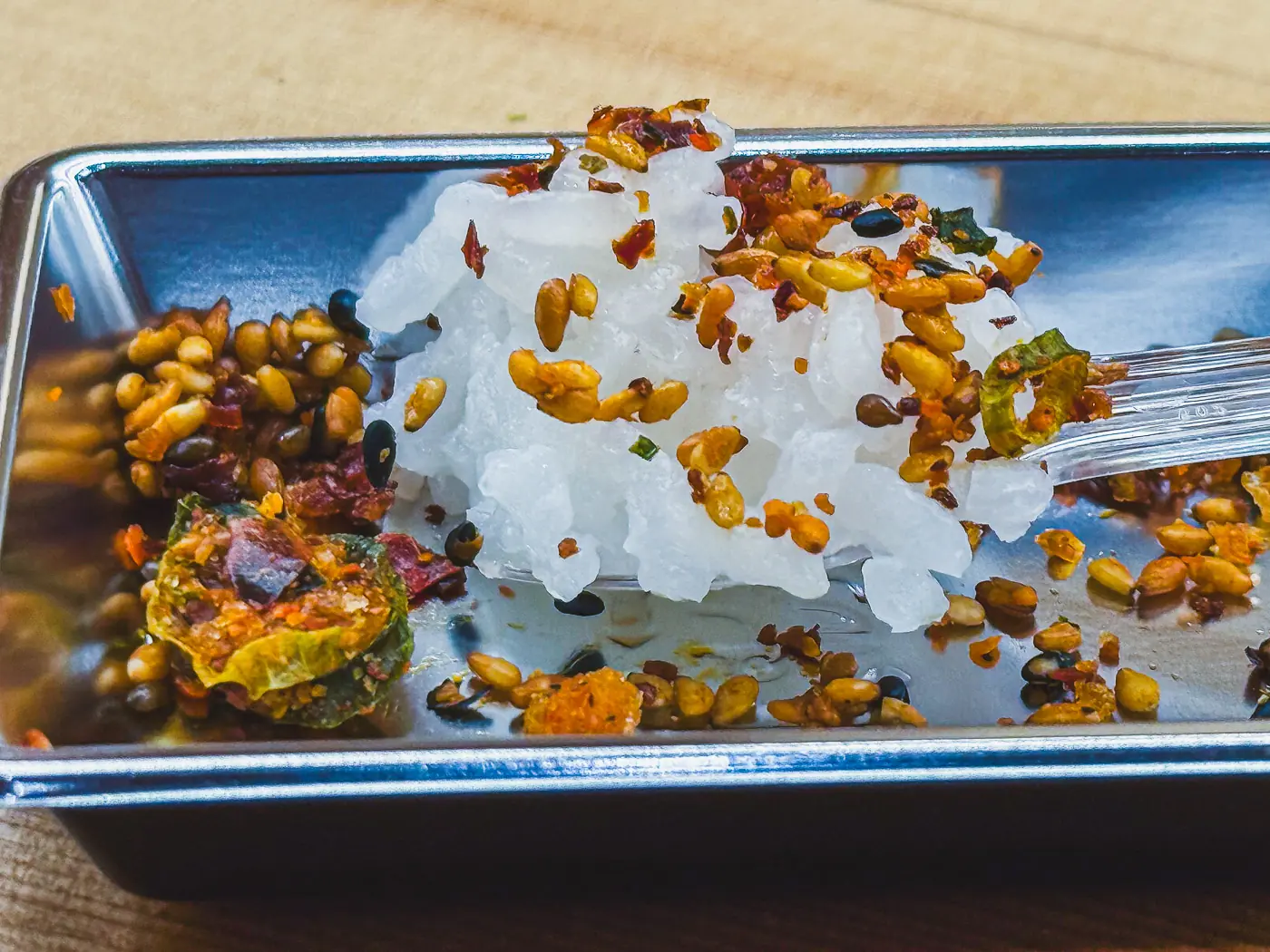
You’ll find plenty of places that are more than happy to help, and many of them have samples labelled in English, so it’s less intimidating for you to try. I brought home dashi, furikake, spicy rice crackers, Japanese tea and more on this tour.
Nishiki Market is the best place in Kyoto to snack on local produce and Japanese food, and immerse yourself in the ancient capital’s extraordinary culinary culture.
Food and Drink Included on the Tour
Of course, food was at the front of my mind, as well as for the Food Tours Japan audience.
The focus on authentic Kyoto cuisine impressed the most. I didn’t know there was such a wide variety of delightful flavours and textures, which made me curious to learn more.
I also tried complimentary bite-sized food and drink samples along the way and bought some locally produced essentials to take home.
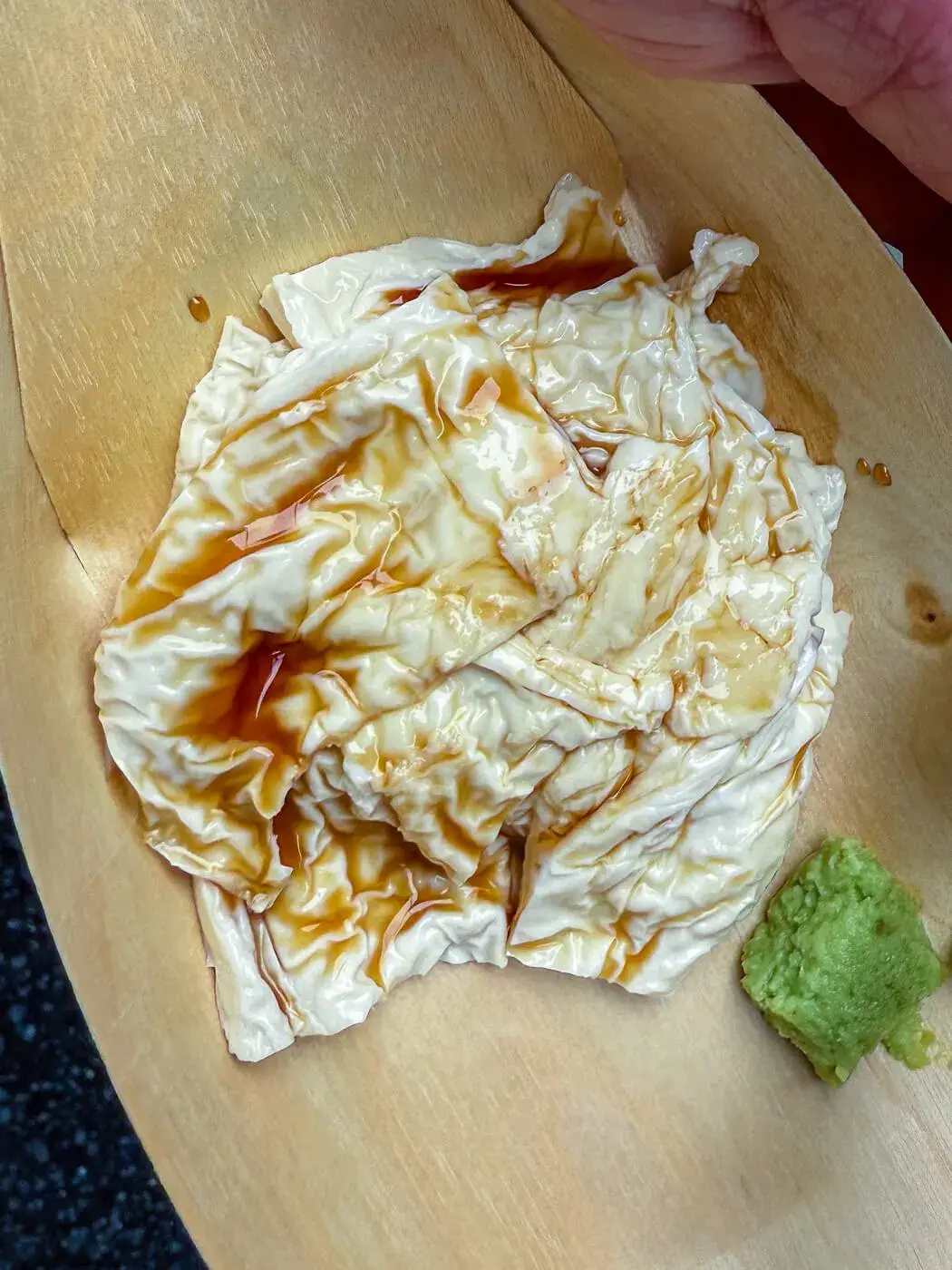
Mmm, delicious tofu skin with soy sauce and wasabi at Nishiki Market – © Chris P King / Food Tours Japan
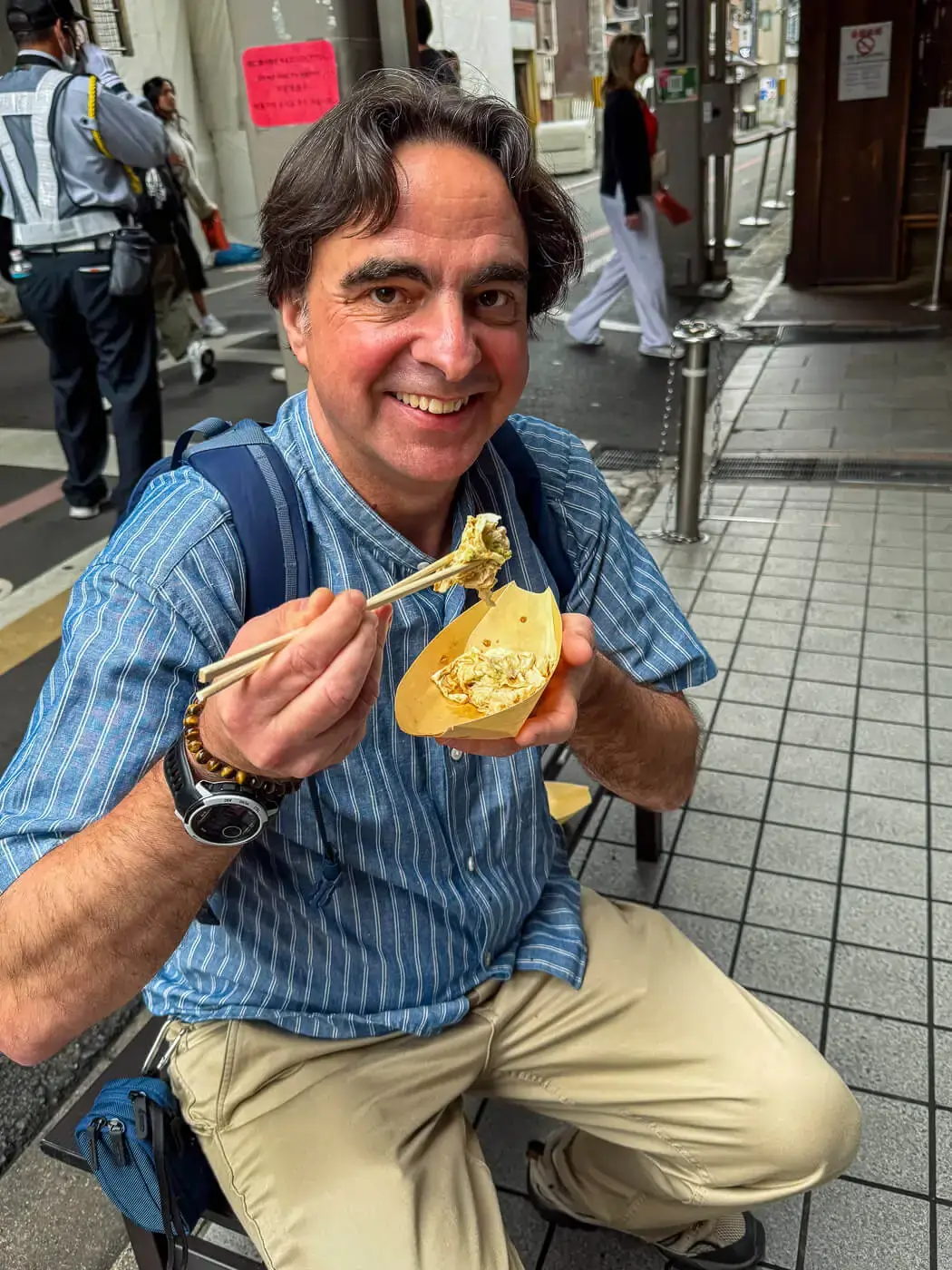
The perfect first dish of the day, eating creamy Kyo-yuba, a Kyoto speciality – © Chris P King / Food Tours Japan
Yuba (tofu skin sashimi-style)
The first inclusive dish was yuba, which Toshi recommended over the other choice of soy milk doughnuts. I was more than happy to oblige, as yuba is one of Kyoto’s most renowned tofu dishes, originating from the city’s Buddhist heritage.
Furthermore, I’m a huge sashimi fan, and the yuba served here raw tickled my fancy. One bite, and I was in heaven; for me, tofu doesn’t get any better than this.
The rich, creamy-like soy milk flavour, with a delicate chewy bite, combined with soy sauce and wasabi, conjures up a texture reminiscent of otoro (fatty tuna). Indeed, the melt-in-your-mouth sensation is similar, and yuba sashimi is a delectable, protein-rich dish for plant-based diets.
Toshi explained that yuba is made by skimming the surface skin from heated soy milk. Here, it’s known as Kyo-Yuba, meaning ‘yuba of Kyoto’.
Yuba is deeply rooted in Kyoto’s Buddhist temple, vegetarian ‘Shojin Ryori’ cuisine, and there’s speculation about its introduction to Japan by Chinese monks up to over 1,000 years ago. Indeed, Kyoto’s abundance of temples, its climate, and its soft water led to the birth of Kyo-Yuba.
I could have chosen soy milk doughnuts with tasty toppings like apple-cinnamon, brown sugar syrup, caramel, or chocolate, but I highly recommend yuba. You’ll also find a variety of 100% Kyoto-produced soy milk and tofu dishes at this store, including ice creams, sundaes, and croquettes.
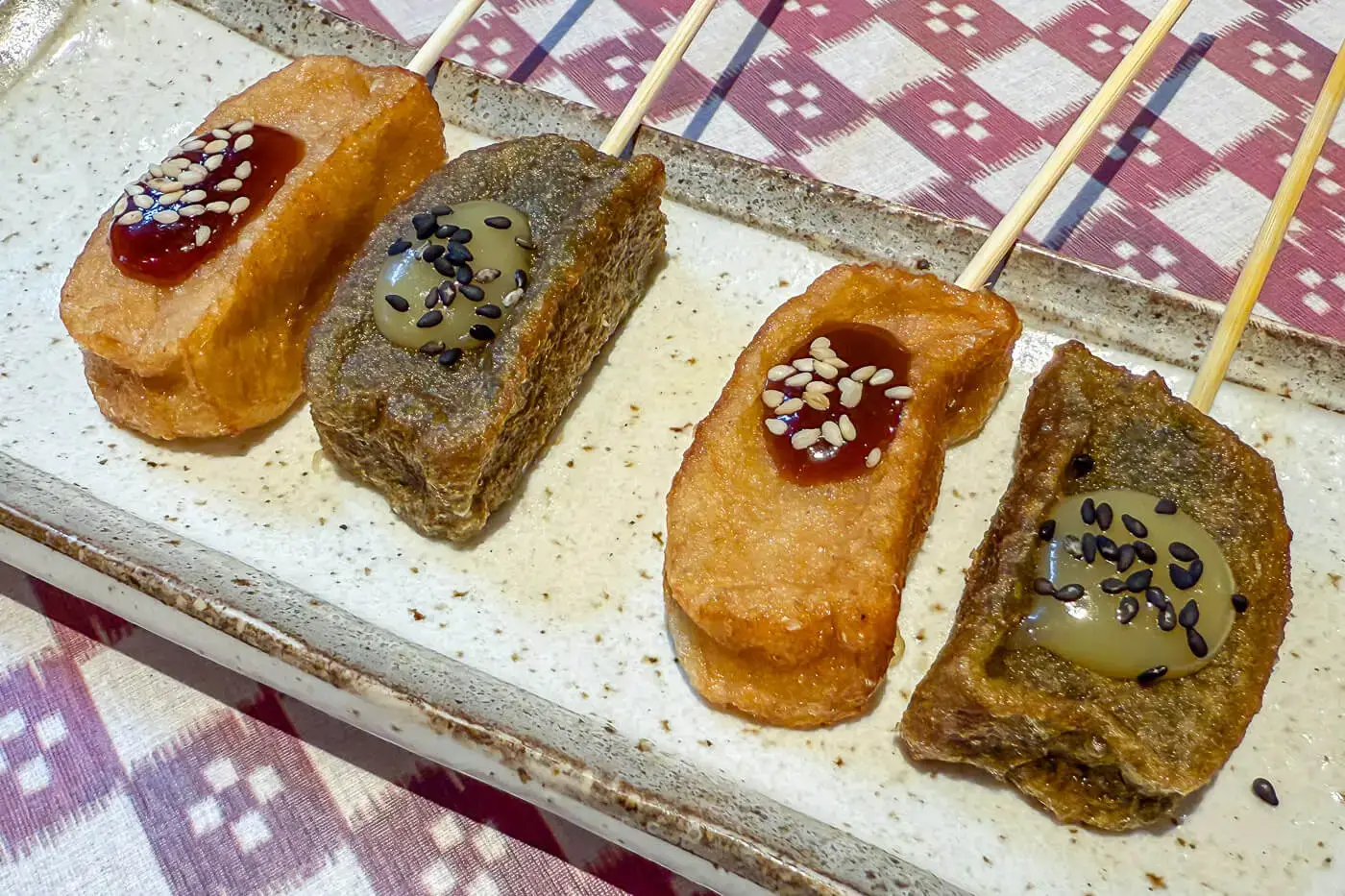
Next, we ate at a restaurant in the market that specialised in Kyoto cuisine and classic izakaya favourites. While waiting for our dishes, I made the most of the inclusive Japanese tea, which cooled me down on a warm day.
Namafu dengaku (grilled wheat gluten cake with miso)
Namafu dengaku is a traditional Kyoto delicacy made with namafu (meaning ‘raw gluten cake’), a wheat gluten mixture mixed with mochi rice flour. Grilled and topped with dengaku, a sweetened miso sauce, it becomes namafu dengaku.
I tried them with red miso and white miso, and surprisingly, they both tasted delicious. Namafu itself has a mild, nondescript flavour; however, when served slightly grilled namafu-dengaku-style, its chewy texture comes alive with the miso sauce and sesame seeds.
Namafu is also rooted in Buddhism, where monks were not allowed to eat meat; therefore, they sought alternative sources of protein. In turn, it became associated with the tea ceremony and the practice of Zen Buddhism.
Throughout the decade I spent in Japan, namafu dengaku wasn’t my go-to type of food. I’m glad Toshi introduced it to me during our Kyoto culinary journey in Nishiki Market.
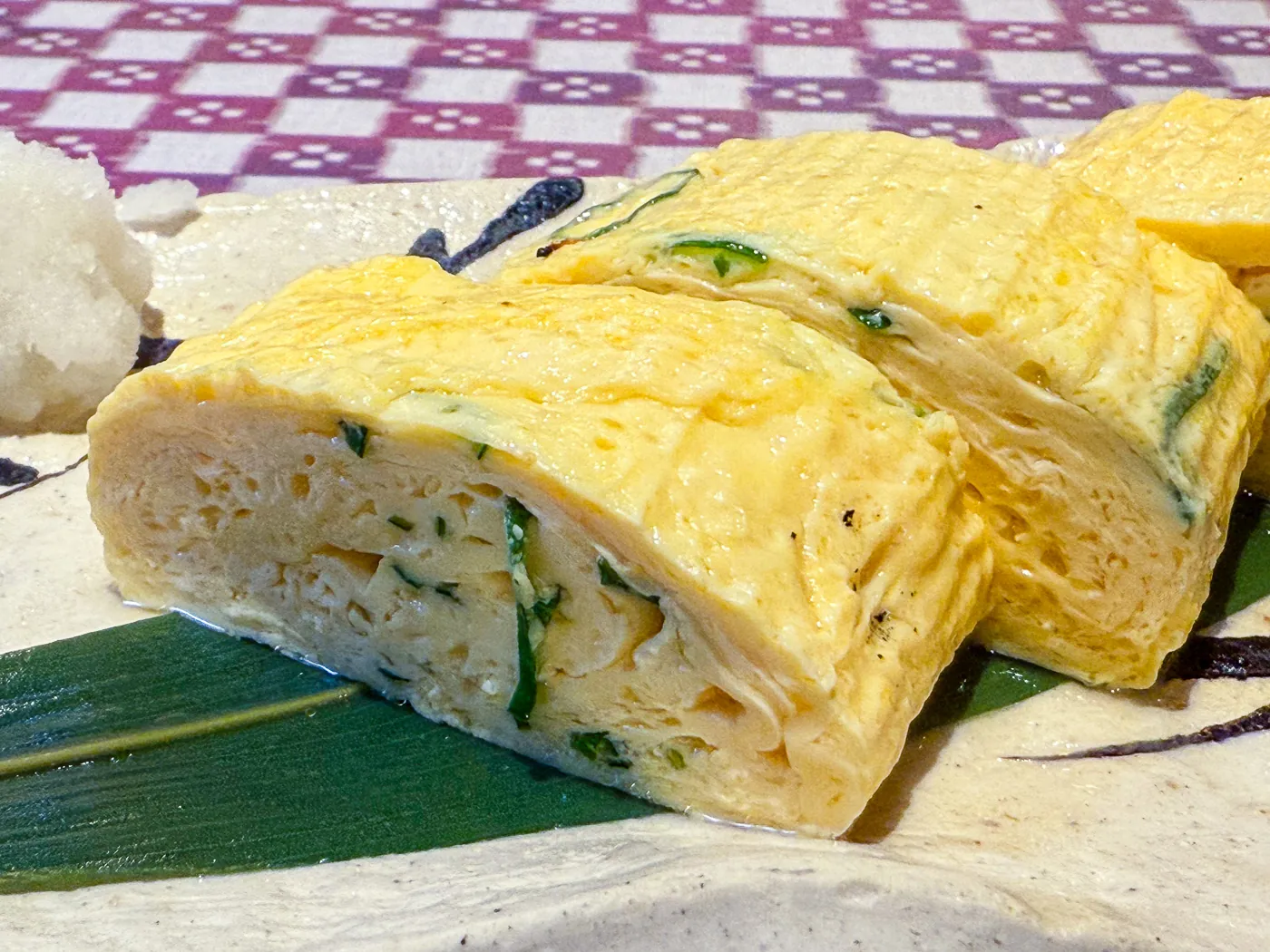
Dashimaki with Kujo Negi (rolled omelette with spring onion)
There’s nothing quite like Japanese-style omelettes, and dashimaki takes it to the next level. The eggs, beaten with a generous amount of dashi, make a succulent texture which differs from tamagoyaki.
This dashimaki was a delight, with added negi (spring onions), served in the typical style with daikon (Japanese radish) and soy sauce to taste. The combination of flavours created a deep umami flavour, and I couldn’t think of a better dashimaki I’ve had in Japan.
Dashimaki with Kujo negi is another classic Kyoto dish. Dashimaki itself is from Kansai, where people appreciate a richer dashi for cooking.
And Kujo Negi originates from Kujo, located just south of Kyoto Station, and is cultivated throughout Kyoto Prefecture today.
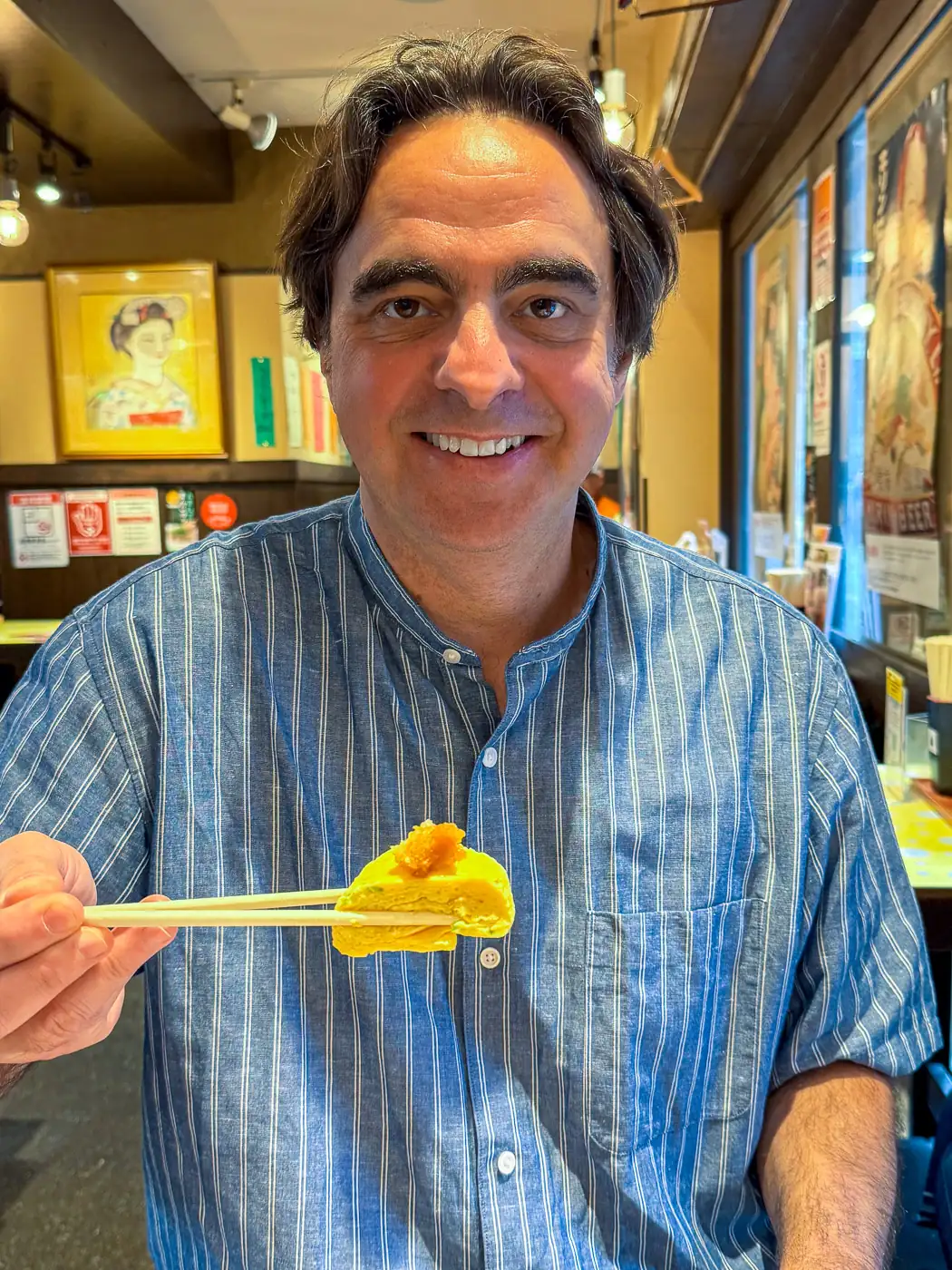
Dashimaki and tamagoyaki: Two styles of Japanese omelette
But, I thought a Japanese omelette is called tamagoyaki, I hear you cry!
The two are similar and cooked in the same way. However, here are the differences between dashimaki and tamagoyaki:
- Dashimaki – an omelette mixed with dashi stock and salt, fried moist without browning, and served with daikon (Japanese radish) and soy sauce to taste. Dashimaki is from Kansai
- Tamagoyaki – an omelette seasoned with sugar and fried thickly until lightly browned. It’s a dish from Kanto and is often called ‘atsuyaki tamago’, and is served in sushi restaurants
It’s safe to say that Japanese households have their own family traditions for seasoning omelettes, often including one or a mix of dashi, salt, soy sauce, and sugar.
I recall my first visit to Tsukiji Market in Tokyo, where I watched tourists stuffing their faces with seafood, wagyu, and desserts. At the same time, Japanese visitors formed long queues to buy tamagoyaki.
The bottom line: omelette is serious business for the Japanese.
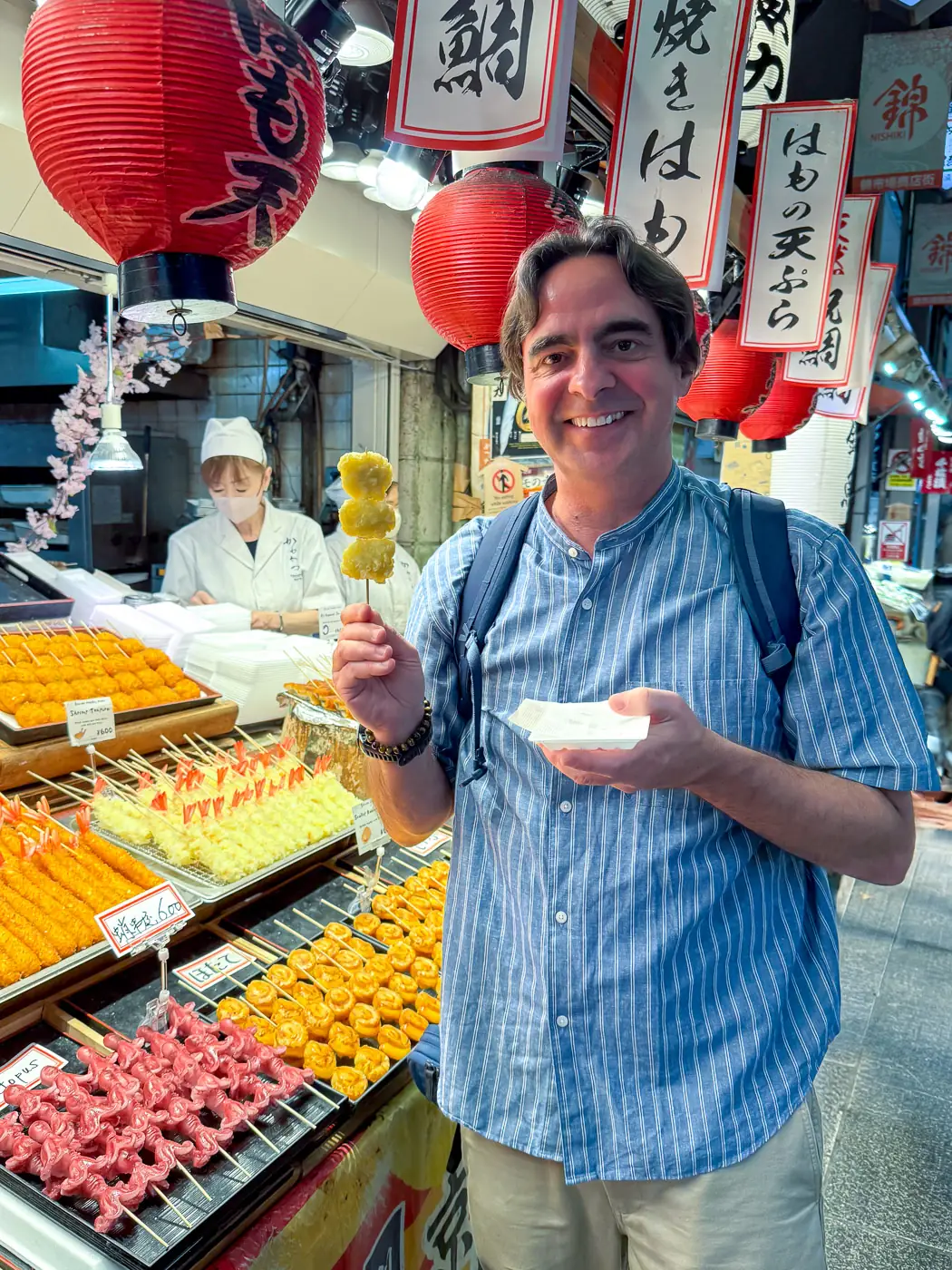
I’m so excited to eat hamo tempura from this iconic food stall at Nishiki Market imminently! – © Chris P King / Food Tours Japan
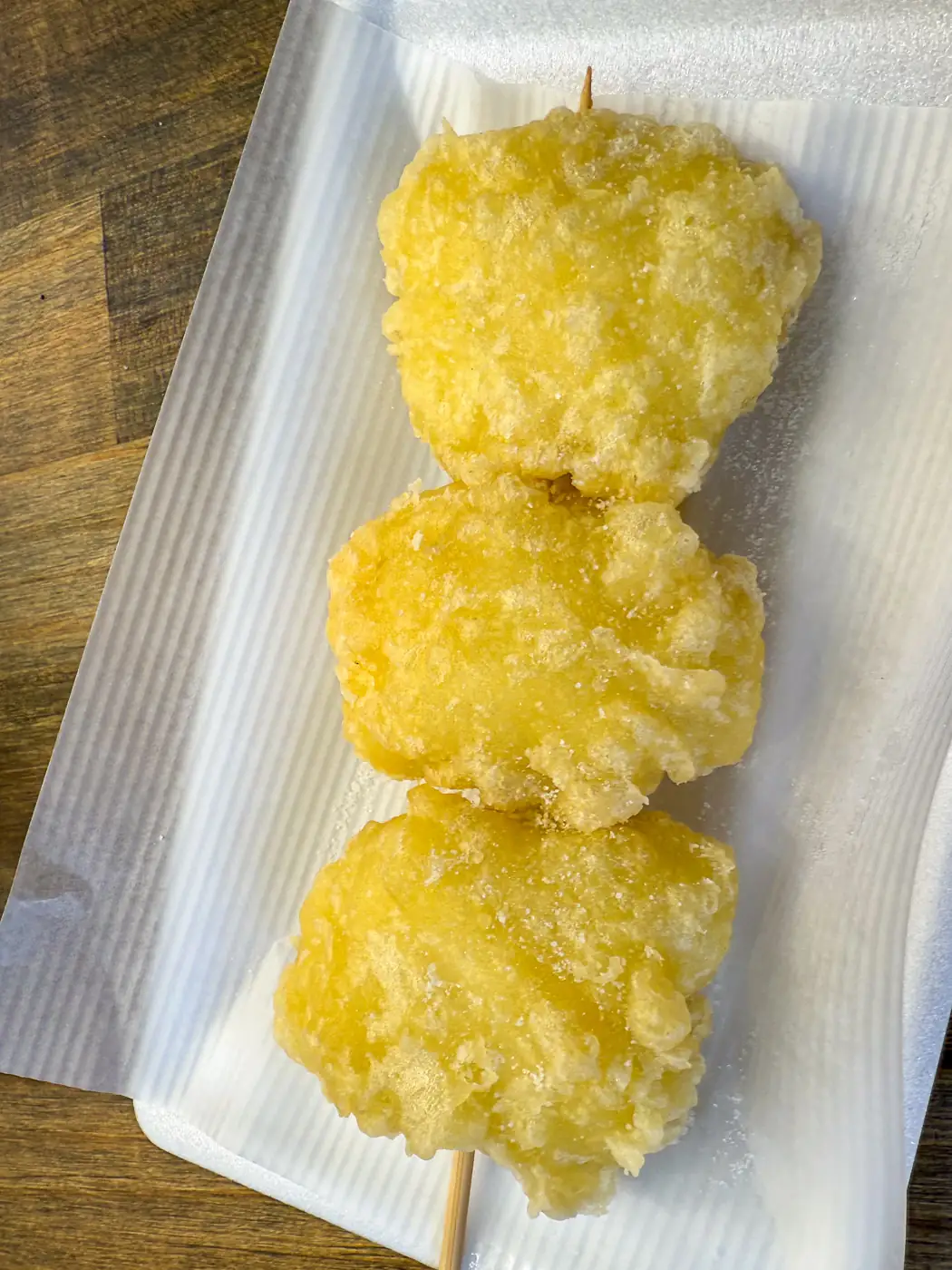
Hamo tempura with lashings of salt, oishii! – © Chris P King / Food Tours Japan
Hamo tempura (Kyoto’s most famous fish)
Hamo, known as daggertooth pike conger in English, is one of my favourite ways to eat tempura. The contrast between the crunchy, thinly coated tempura and the moist, fluffy, rich in fat, and slightly sweet fish creates a harmonious and unique taste sensation.
After watching the dish being prepared in front of me, I added some salt and took a generous bite. Oishii, wonderful!
Hamo in Kyoto
Hamo is Kyoto’s most famous fish and popular from early spring through to autumn. In fact, Kyoto’s world-renowned Gion Matsuri (Gion Festival) is often called Hamo Matsuri (Hamo Festival) for the centuries-old tradition of eating hamo during the event.
As Toshi-san explained, hamo is a strong, ferocious fish that became popular in Kyoto centuries ago because it survived the arduous journey from the sea and was prepared fresh there.
He continued to say that he disliked fish when he was growing up in Kyoto, because he always got bones stuck in his mouth, which made him ache. In those times, hamo was cheaper than eel; however, now hamo is more expensive.
Hamo takes a long time to prepare, with frequent cuts of the fish’s fine bones using a specialist honekiri knife (honekiri means ‘bone cutting’), also known as a hamokiri knife.

Catching a hamo in Osaka Bay
Hamo holds a special place in my food-loving heart because I caught one in Osaka Bay on a boat fishing trip. We were targeting tachuio (largehead hairtail) that day; however, the first fish I caught was a hamo.
After the trip, we took our bountiful catch of fish to my local izakaya. The master prepared hamo tempura, and it’s never tasted that good.
Hamo is often on the izakaya menu from early summer through autumn, and I highly recommend it when you’re in Osaka or Kyoto. You can enjoy eating it in a variety of ways, including hamo no otoshi (parboiled) served with ume (plum) sauce, hamo sushi, grilled with salt or soy sauce, hamo nabe (hot pot), and tempura, as I did on this tour.
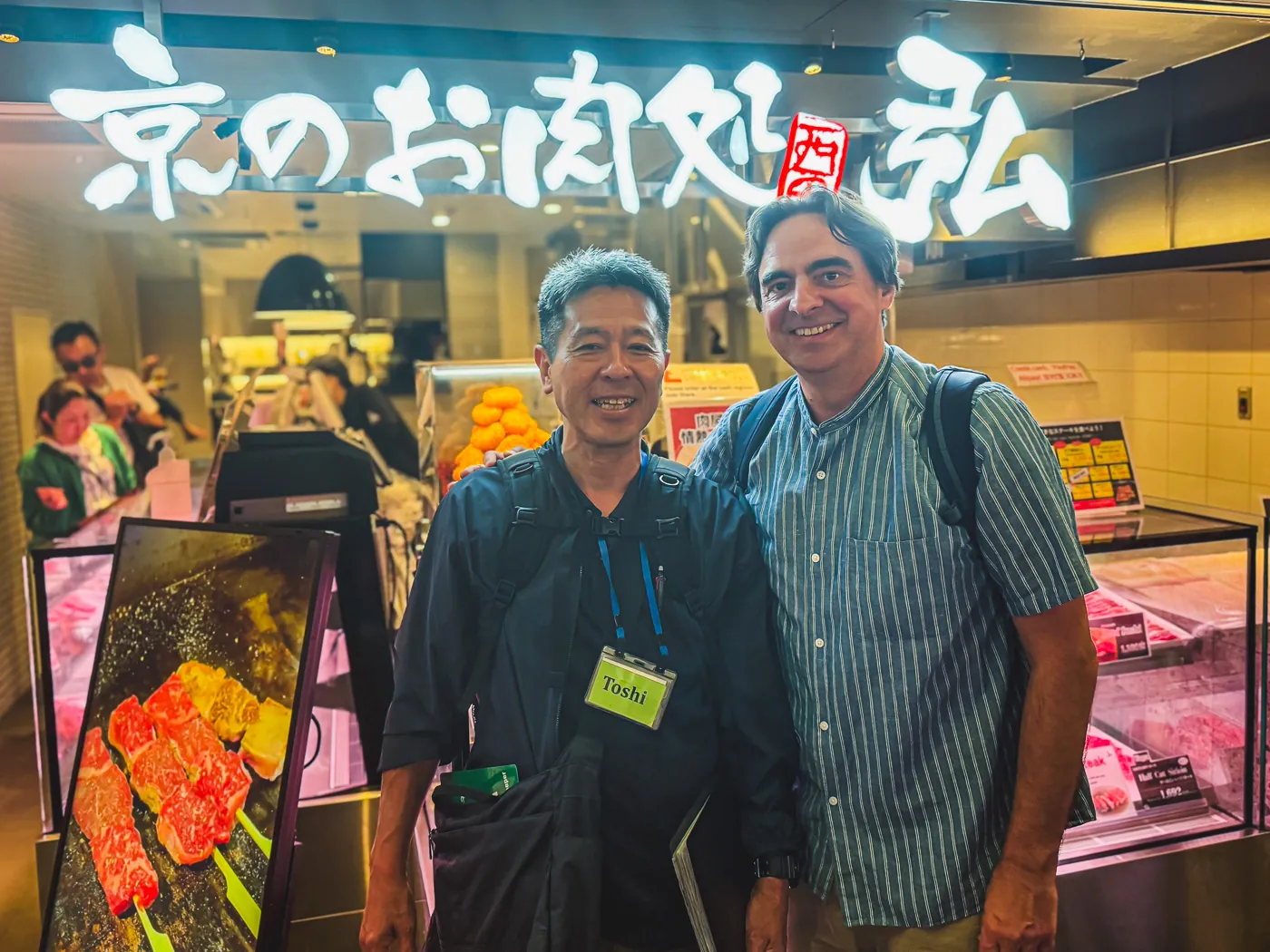
Wagyu beef skewer (melt-in-your-mouth goodness)
Ah, who doesn’t love wagyu beef, eh?! And what a way to top off some delish food with a unique wagyu beef store.
Unlike many wagyu restaurants and shops in Japan, the place we visited didn’t specialise in any one or a few types of wagyu. Toshi-san took me to a place where the store’s owners and buyers select the best wagyu on the day from Kyoto’s wholesale market.
With 15 restaurants and more shops in Kyoto and a reputation for high-quality, excellent-value wagyu, their methods are certainly paying off.
One bite of the wagyu skewer told me all I needed to know about the high-quality beef and its unmistakable melt-in-your-mouth texture. Cooked to perfection and with a perfect balance of fat, I always appreciate how lucky I am to eat such meaty goodness.
Responsible Tour Operator: Useful Words and Tourist Etiquette
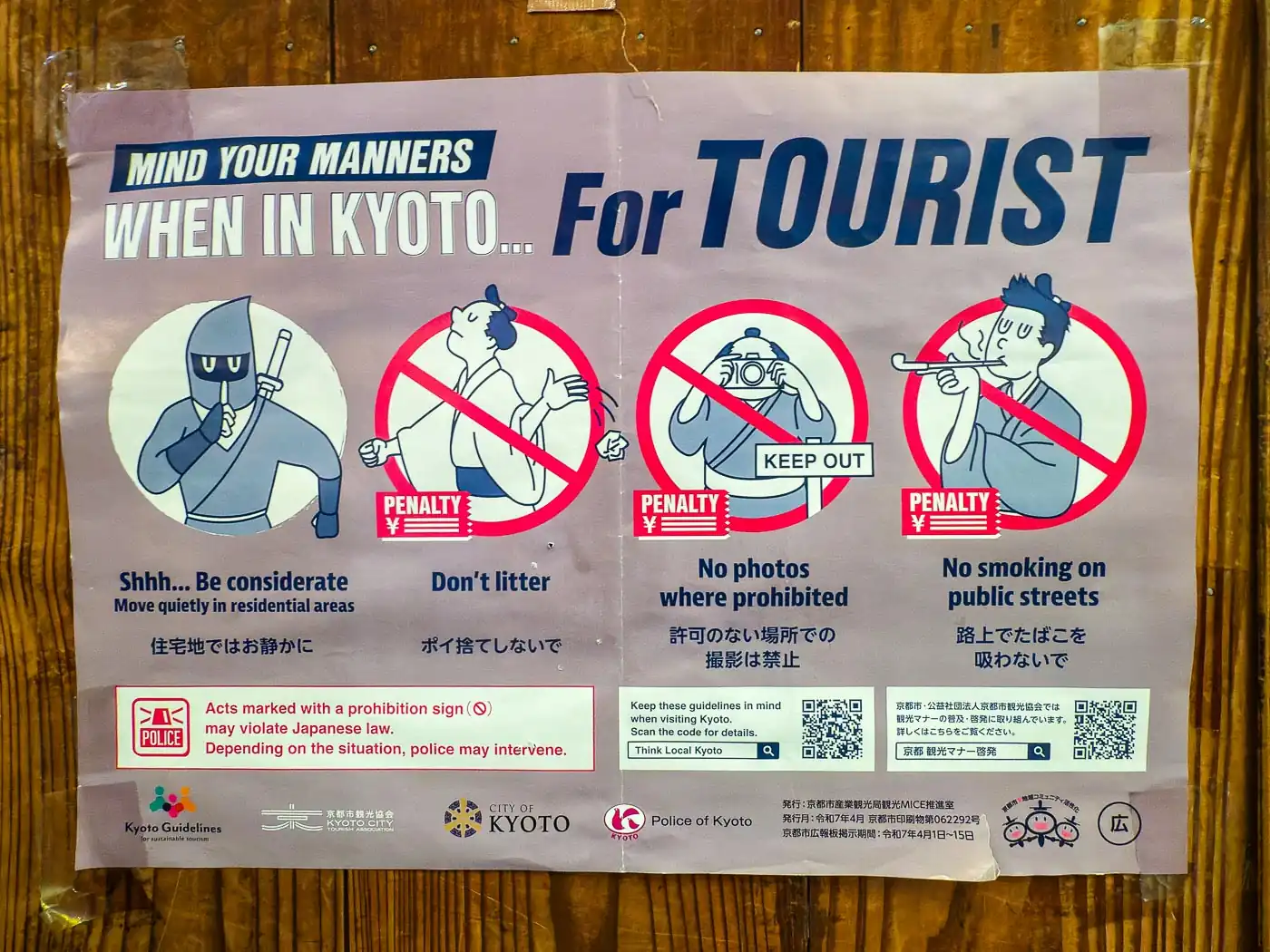
At the beginning of the tour, Toshi showed me some useful Japanese expressions and the expected tourist etiquette. With Kyoto packed with visitors, locals are struggling with the volume of people, and tourist behaviour is in the spotlight.
I welcomed this approach, demonstrating the tour operator’s responsibility and care.
Useful words to know
Learning some simple words is a wonderful way to show your respect and appreciation to the locals.
- Okini [o-kee-nee] – thank you (Kansai dialect, showing sensitivity to local norms)
- Oishii [oy-shee] – so delicious or very yummy (you can also use ‘umai’ [oo-my])
- Sumimasen [soo-mee-mah-sen] – excuse me (a polite expression when moving around busy places)
Tourist etiquette
Nishiki Market is a popular tourist destination. Adhering to local customs is crucial to make you a responsible and considerate visitor.
By following some basic behaviour guidelines, you’ll blend in more easily and show good manners to locals.
- Do not spread across the road – don’t get in the way of locals, especially in the market, with a walking area between 3-5 metres wide
- Do not eat while walking – it’s a no-no in Japan; they don’t want food waste littering the streets
- No touching food products – unless you’re going to purchase them (I’d hope this is obvious!)
There are a few things you should avoid at Nishiki Market and throughout the rest of your trip in Japan. Around Kyoto, you’ll also see posters like the one above that show bad manners to avoid.
He also advised:
- Cash only – paying by cards is not so widely accepted in Japan, especially for small businesses
- Very few toilets – if you need to go, go now before we get to the market tour!
Thanks, Toshi-san, for this helpful upfront advice and reminders!
My Exceptional Tour Guide – Toshi-san
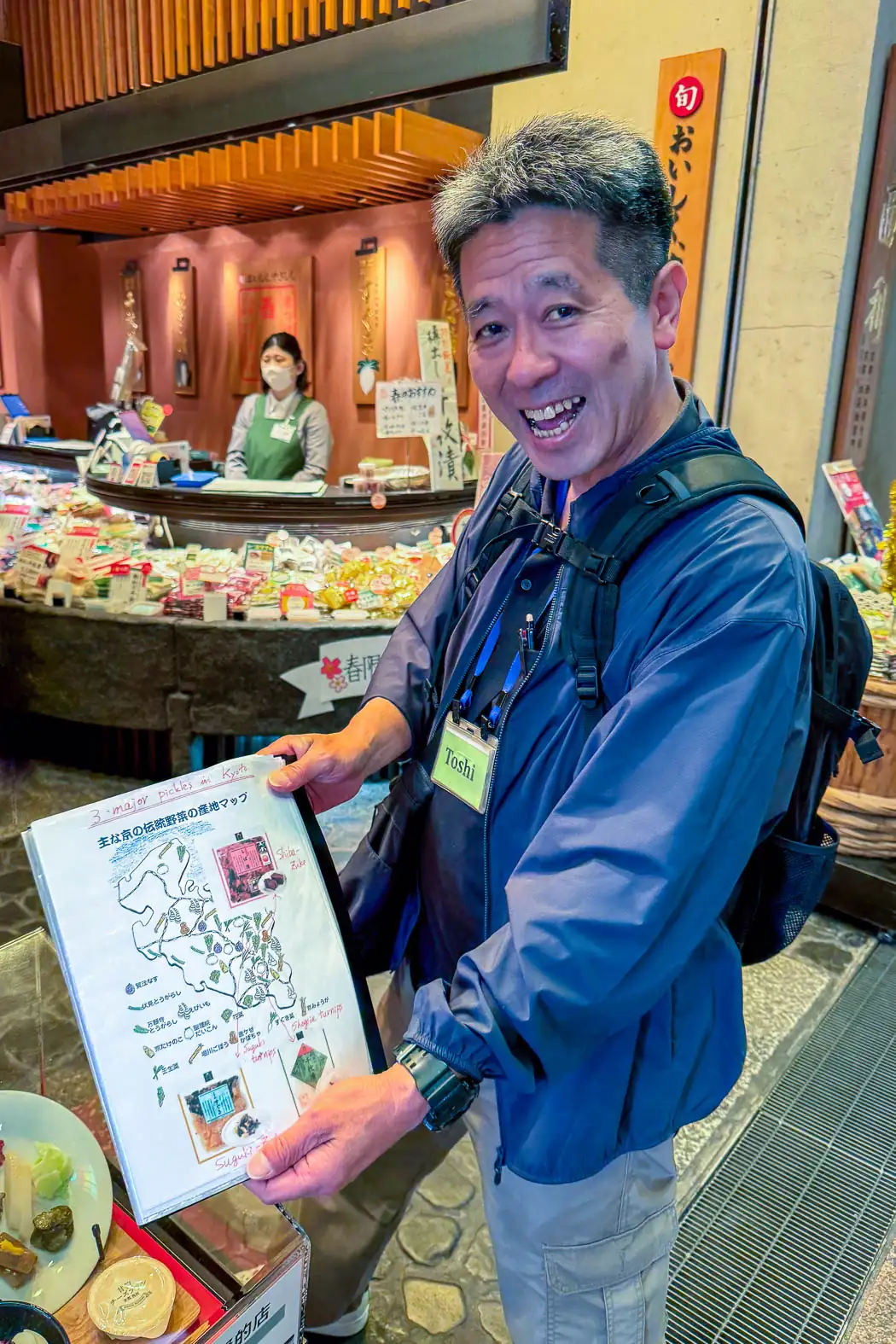
I couldn’t have asked for a more perfect guide in Toshi-san, who grew up near Nishiki Market. His passion for his local area shone through, making the experience truly unforgettable.
Toshi-san’s genuine, warm, relaxed and fun personality made navigating the vibrant market a breeze. He kept me curious and engaged throughout the tour, and also gave me the flexibility to explore the food and drink aspects more deeply.
I understood his English perfectly and was fascinated by his commentary and his well-prepared notes and slides. I also appreciated his patience and keeping me in check when I wandered off or went down rabbit holes on specific subjects.
Toshi-san’s personal anecdotes
Toshi-san’s fascinating food-related anecdotes and family stories brought the market and Kyoto’s culinary traditions to life, making the experience more personal and genuine.
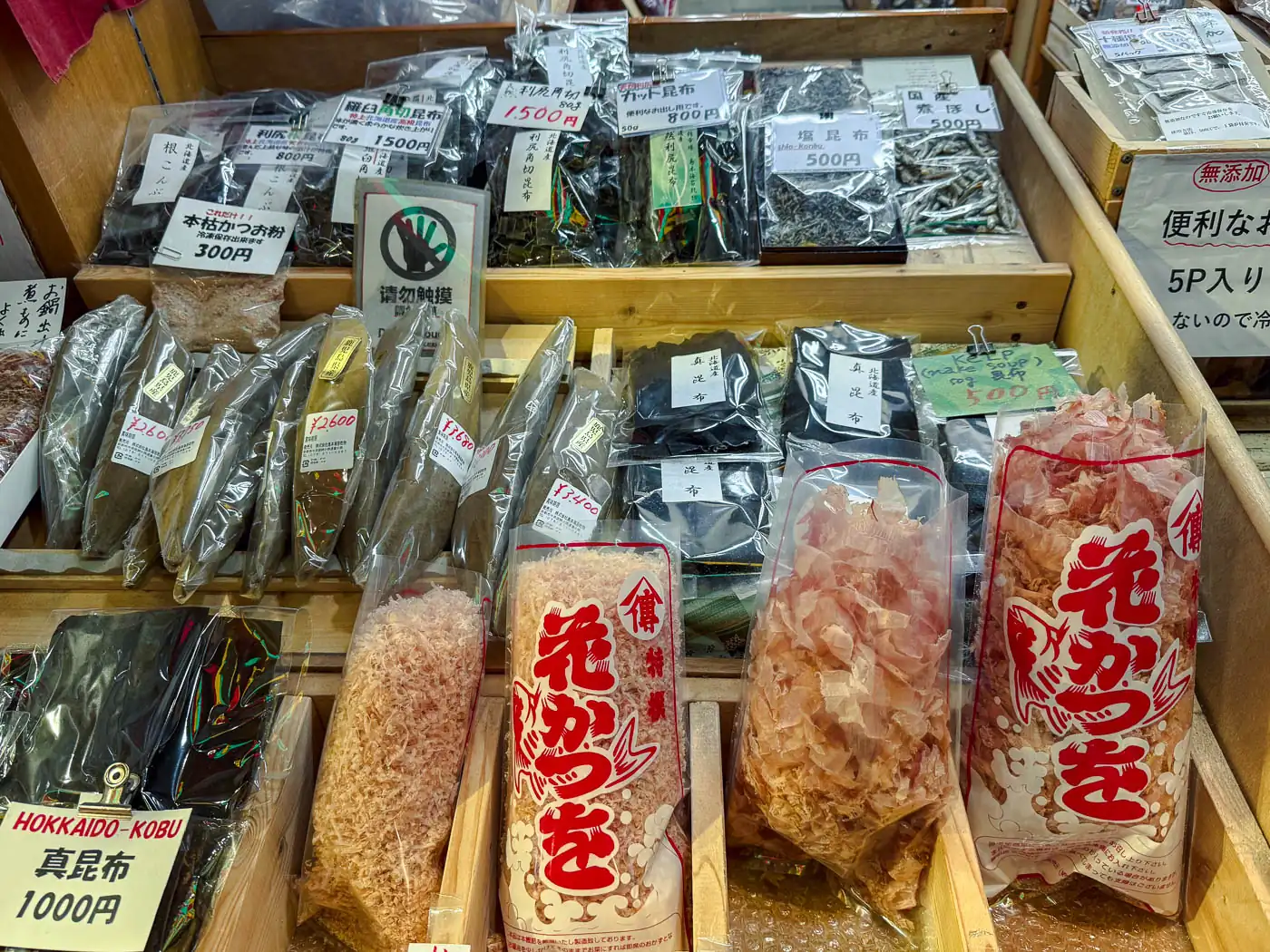
In particular, I enjoyed his authentic boyhood stories about him shaving katsuobushi (dried bonito flakes) to make dashi before it was available ready-shaved. And how his grandfather was an expert at making sabazushi, a quintessential Kyoto dish made from vinegared mackerel, rice, kombu and wrapped in bamboo leaves.
Arigato gosaimasu, Toshi-san, for an incredible 10/10 Nishiki Market and local food tour!
Why I Recommend this Nishiki Market Tour
For sure, this is one of my favourite guided food and drink experiences in Japan. And that’s quite something, considering I lived in Japan for 10 years and travelled widely.
Furthermore, I’ve undertaken around 50 guided culinary adventures, from food and market tours to geisha and maiko dinners, premium dining, cooking classes, fishing trips and more. And I’ve visited Nishiki Market half a dozen times since my first visit in 2014.
It’s not just another local market tour; it’s a unique gourmet and cultural immersion into Kyo-ryori (Kyoto cuisine) and Nishiki Market with its rich history and exceptional food and drink heritage.
I highly recommend this unique Nishiki Market food tour for anyone who wants to explore Kyoto’s distinctive culinary culture.
Sources:
- ‘History of Sashimi in Japan’ – Shiba Tsuneo (Journal of National Fisheries University Volume 60 Issue 3 – 2012)
- ‘Nishiki Market History’ – Nishiki Market Shopping Street (official website)
- ‘Nishiki Market is deep in greed, but it also has pure depth: Talking about life in Nishiki Market’ – Nishiki Market Shopping Street (official website – 2012)

Discovering washoku through travel in Japan. Sharing the best Japanese food and drink experiences. Living in Osaka. Join me on my journey!